

By 2Clean · Published · Updated
Pressure Washing vs. Soft Washing: What's the Difference?
Compare pressure washing and soft washing, including how each method works, which surfaces they suit, and what to ask before cleaning your property.
The short answer
Pressure washing relies mainly on controlled water pressure to remove buildup from durable surfaces. Soft washing relies on low pressure plus cleaning solutions to treat organic growth on surfaces that need a gentler rinse.
The core difference isn't really about which method cleans "better" — it's about which method is safe for the surface in front of you. Concrete, pavers, and brick can handle the mechanical force of high-pressure water without much risk. Painted siding, stucco, and roofing shingles can't; enough pressure can strip paint, force water behind panels, or lift shingle granules. That's why a professional pressure washing crew doesn't use the same setting on a driveway as they would on a house's exterior walls.
When pressure washing is the right call
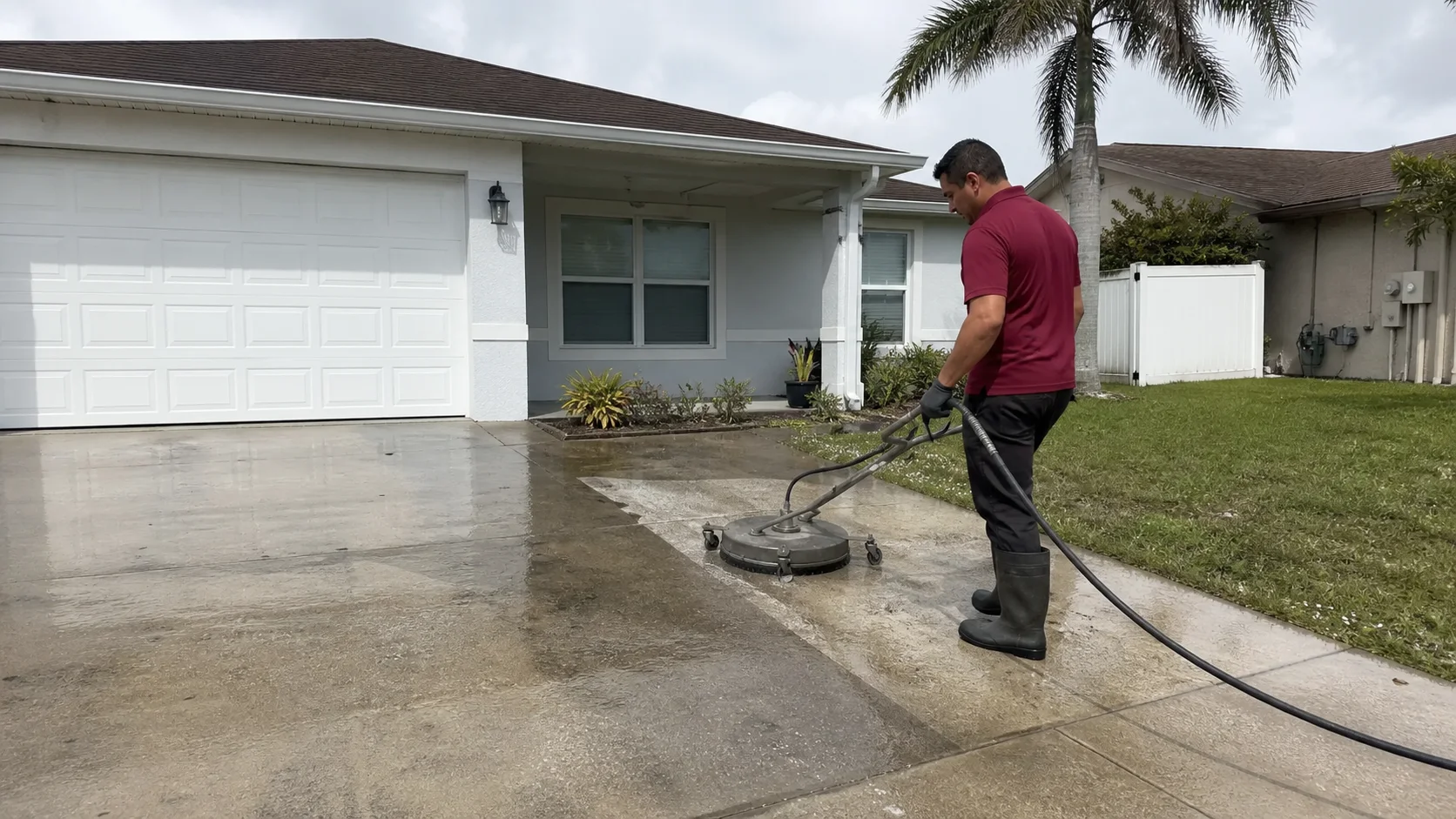
Pressure washing is built for hard, non-porous surfaces that can take direct mechanical force: concrete driveways, walkways, pool decks, and paver surfaces.
These surfaces accumulate oil stains, tire marks, ground-in dirt, and algae film that simple scrubbing won't touch. High-pressure water physically dislodges that buildup. It's also the go-to method ahead of a paver sealing job, since sealant needs to go onto a clean, debris-free surface to bond properly.
When soft washing is the right call
Soft washing is designed for home and building exteriors, roofs, and any painted or finished surface where high pressure risks doing more harm than good.
Instead of relying on force, soft washing uses surface-appropriate cleaning solutions to treat mold, mildew, and algae, then rinses at low pressure. Treating biological growth directly can produce a more complete result than using water pressure alone on the same delicate surface.
Can both be used on the same property?
Yes — most properties benefit from both methods, just applied to different surfaces during the same visit.
A typical exterior cleaning might use pressure washing on the driveway and pool deck while using soft washing on the siding, soffits, and roofline. If you're not sure which surfaces on your property need which method, that's a normal question to ask before booking — request a free quote and describe what you'd like cleaned, and the surfaces will be matched to the right method.
Choosing a method for each commercial surface
The substrate decides, not the dirt. Porous and hard surfaces that can withstand mechanical force can be pressure washed; anything painted, coated, sealed, or biological gets soft washed.
Concrete flatwork and pavers take pressure. Stucco takes reduced pressure and usually a detergent. EIFS, which is a foam-backed synthetic finish, is damaged by high pressure and must be soft washed. Painted metal and anodised aluminium mark easily. Glass curtain wall is cleaned, not blasted. Roofs are soft washed only. On a commercial elevation several of these sit within a few feet of each other, which is why a scope of work should name the method per surface rather than per building. If you are still deciding what your property needs, commercial and HOA exterior cleaning covers how a scope gets built.
What the roofing industry says about pressure washing a roof
It says do not. ARMA, the Asphalt Roofing Manufacturers Association, states in its bulletin Algae Discoloration of Roofs that a power washer or brush should not be used on asphalt roofing, because high-pressure washing is likely to damage it.
The organism causing the dark streaking is Gloeocapsa magma, a cyanobacterium that feeds on moisture and organic debris. ARMA prescribes sodium hypochlorite with a gentle rinse, and notes that results are temporary. The Tile Roofing Industry Alliance says clay and concrete tile is essentially maintenance-free, and that professional low-intensity pressure washing can be done on tile if desired. That split matters on a South Florida property, where one building can carry asphalt shingle, barrel tile and a flat membrane at the same time. Roof cleaning is treated as its own method for exactly this reason.
Why commercial buildings often need both methods on one visit
The physics is the same as on a house, but the stakes and constraints are not: more substrate types on one elevation, tenants and guests to work around, a longer ladder of access equipment, and wash-water containment obligations a home does not have.
Multiple substrates on a single elevation, stucco, painted metal, glass and precast concrete, often mean both methods on the same visit at different heights. Access method is usually decided before cleaning method, because a ladder, a lift or rope access each constrain what equipment can reach the surface at all. That is the practical difference between a residential quote and a commercial one: the commercial scope has to say how the crew gets to each surface, not only what they do when they arrive.
How long the results last
Neither method makes a surface permanently clean, because both remove what is there rather than preventing what comes back. Soft washing treats the organism, so regrowth is usually slower than after a pressure wash that only lifts the visible layer.
In South Florida the wet season runs roughly May to October, and humidity and salt air feed regrowth year round. ARMA states plainly that cleaning results are temporary. What actually extends an interval is shade and irrigation management, drainage that does not keep a surface wet, and cleaning on a schedule rather than waiting until staining is obvious. A property cleaned on a set interval usually needs less aggressive work each time, which is easier on the surface as well as the budget.
What changes when the building is occupied
The constraint stops being the surface and becomes the people. Tenant hours, guest experience, patient access and loading traffic decide when work happens, and that in turn decides which method and equipment can be used at all.
Soft washing is quieter and uses less water, which suits occupied elevations and overnight work near guest rooms. Pressure washing is louder and wetter, so it suits flatwork before opening hours. Wash water has to be contained on a commercial site regardless of method. Notice to tenants, protected landscaping and a route that keeps walkways open are part of the scope, not extras, and a quote that does not mention them has not accounted for the building being in use. Request a free quote and describe how the property operates, not just what needs cleaning.