
By 2Clean · Published · Updated
What Causes Black Streaks on Exterior Walls in Florida?
Learn what commonly causes dark exterior streaks in Florida, why surface identification matters, and when low-pressure cleaning may be appropriate.
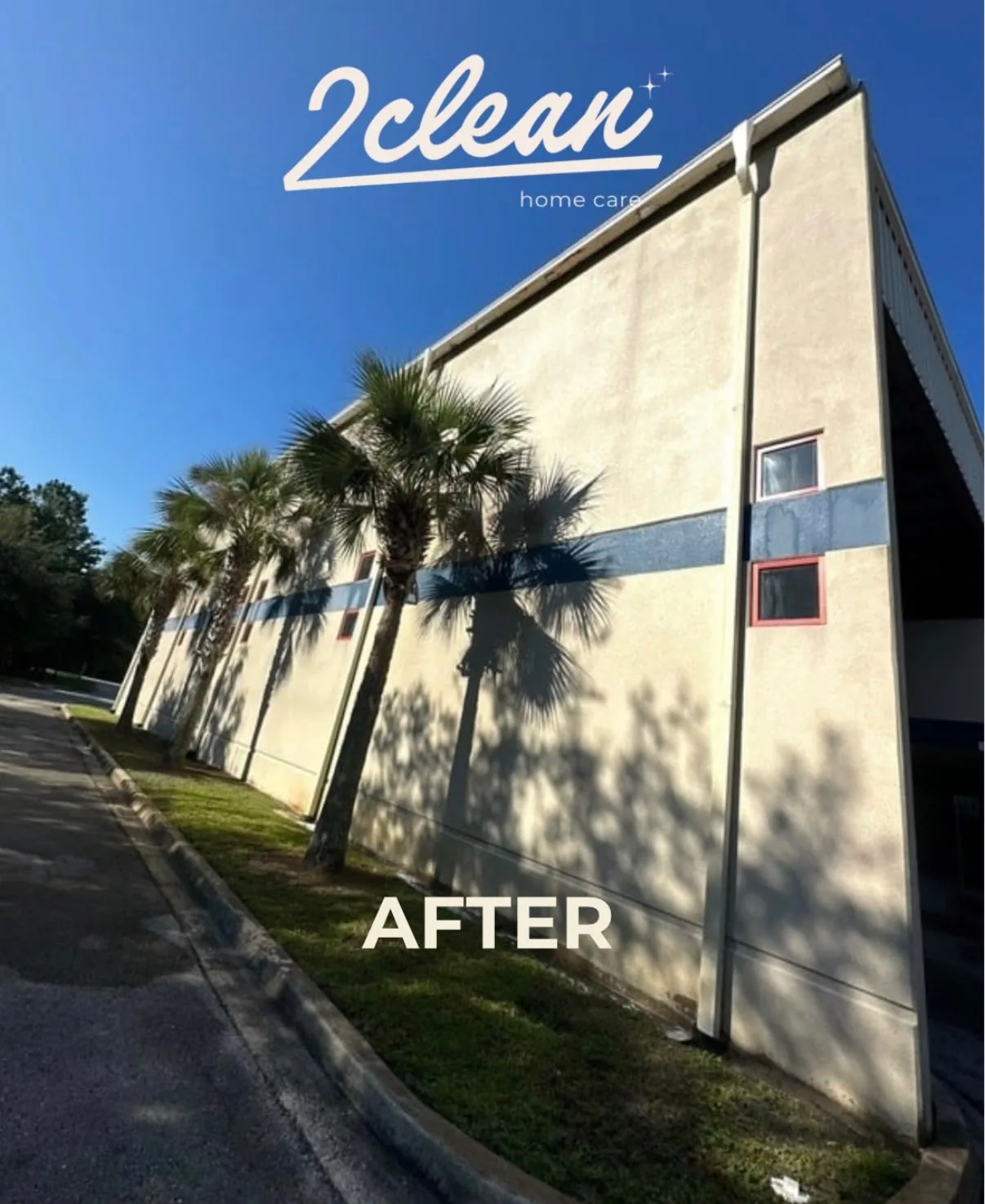
The short answer
Black streaks on exterior walls and roofs are most commonly caused by algae — specifically a type that feeds on organic material and thrives in humid, shaded conditions.
It's easy to assume black streaking is just accumulated dirt or pollution residue, but in most cases it's biological growth, not dirt. That distinction matters because it changes how the staining should be treated. For a property assessment, review soft washing in Miami. Identify the wall finish, existing coating issues and adjacent areas before agreeing the treatment.
Why it shows up in Florida specifically
Florida's combination of high humidity, warm year-round temperatures, and frequent rain creates near-ideal growing conditions for algae on exterior surfaces.
North-facing walls and shaded areas that stay damp longer after rain tend to show streaking first, since algae needs consistent moisture to establish itself. Once it takes hold, it spreads over time, which is why streaking often starts small near a roofline or gutter and gradually widens.
Why pressure alone doesn't fully solve it
Blasting the surface with high-pressure water can knock the visible growth off, but it doesn't necessarily kill what's left behind in the surface's pores — so streaking often returns faster than expected.
This is the main reason soft washing is the standard approach for exterior walls and roofs rather than pressure washing. Soft washing applies a cleaning solution that treats the algae at the source, then rinses it away at low pressure — protecting paint and siding while addressing the actual cause of the staining, not just its surface appearance.
Preventing it from coming back
Because the underlying cause is biological, results from a soft wash treatment tend to last considerably longer than a plain water rinse, though some regrowth over time is normal in Florida's climate.
Trimming back vegetation that shades and dampens exterior walls, keeping gutters clear, and scheduling periodic soft washing all help keep new growth from re-establishing quickly. If streaking has already spread across a large area, it's worth requesting a quote so the right treatment can be scoped to the size of the problem.